
How to Maintain Wall Clocks in Living Rooms: Cleaning & Care Guide
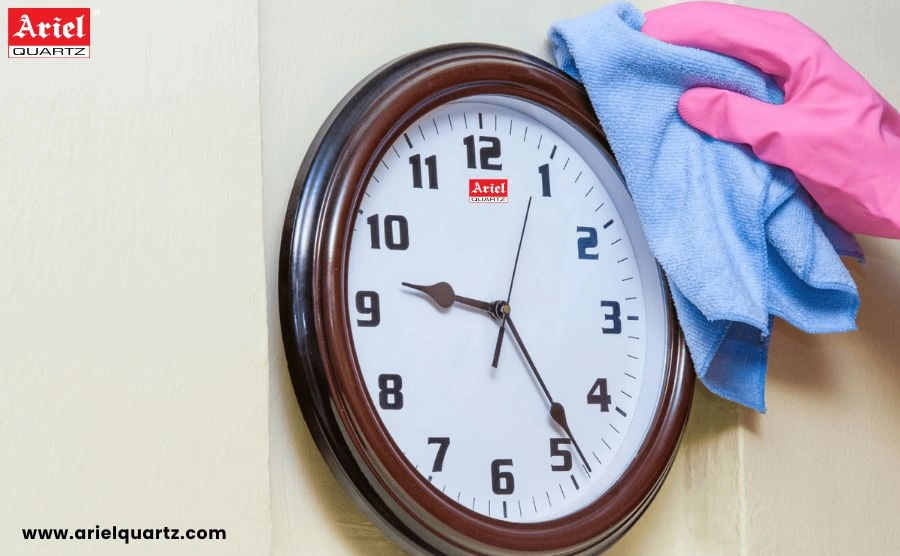
When clocks are designed for living rooms, they serve a purpose that goes beyond just telling time. They also add character to your room and, in some cases, become the main attraction of your room. You need to maintain wall clocks for living room, which becomes an essential task that ensures both long-term functionality and visual appeal of your clock in your loved space.
With all styles of wall clocks, we can benefit from a regular and simple maintenance schedule. Such a schedule will assist in maintaining accuracy, cleanliness, and appearance throughout the life of the clock. Many companies, including Ariel Quartz, develop durable wall clocks; however, all clocks should receive routine maintenance and care to extend their useful life. And in this guide, we will teach you how to care for wall clocks at home.
A Simple Guide Before You Begin
Ever wondered “how to maintain designer wall clocks”?
When it comes to the maintenance of your wall clocks, a few simple processes applied help you in keeping it working for a longer period of time. The following wall clock cleaning guide will help you through the process of taking care of your wall clocks and keeping the mechanical elements of your clock and its finish in good condition for a long time.
If these rules are followed, you will have all the necessary tools that you need to ensure your wall clock stays in the best possible condition and appearance.
Basic Cleaning Routine
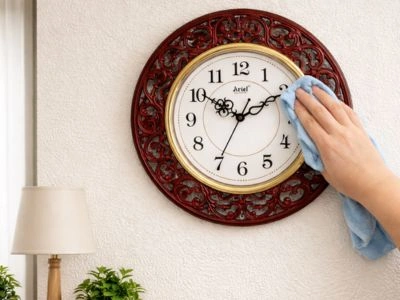
A routine of cleaning your wall clock will help keep it looking and working properly. Using only gentle methods, you get to prevent dust from accumulating and then protect the finish of the wall clock.
- Dusting: Wipe down your wall clock once a week using a soft microfiber cloth. It is in the nature of dust to fall and settle down quickly on surfaces, especially in high-traffic living rooms, and may affect visibility or create dull patches.
- Glass Cleaning: Use a mild glass cleaner on the glass cover of the clock by spraying it onto the cloth but not directly onto the clock, thus avoiding the moisture slipping into either the mechanism or the dial.
- Care of the Frame: For metal clocks, use a dry cloth or a non-abrasive cleaner suitable for the finish. For wood frames, gently wipe with a damp cloth and dry immediately to avoid the absorption of moisture.
- Hand Check: Sometimes, the hands gather dust or move a bit. A gentle realignment, performed without pressure, keeps them from touching each other and makes sure the movement remains smooth.
- Avoid Harsh Chemicals: As they may cause discoloration or damage the minute details found on some of the more elaborately designed wall clocks for living rooms.
Placement Tips for Longer Life

The place where you hang your wall clock will affect the life of the clock. Picking the right location helps you not just to protect the mechanism of the clock but also the frame and style of the wall clock as well.
- Avoid Direct Sunlight: As it may cause fading on the dial, weakening of adhesives, and distortion of materials. Place the clock on a wall that receives soft or indirect light.
- Avoid Humidity: Living rooms combined with kitchens, or those facing a balcony, show a variation in humidity. Excess moisture may eventually affect internal mechanisms or metallic parts.
- Stable walls only: Avoid hollow or vibrating walls, especially those shared with staircases, washing areas, or big appliances, since the movement will eventually loosen the screws.
- Height matters: hang clocks at eye level or just above. It will prevent accidental touches, keep them in view, and provide easy cleaning.
- Balanced Installation: Secure the hook or screw properly. An imbalanced clock may stress the mechanism, lose time and even fall.
Troubleshooting Common Issues

All wall clocks will have some issues as they age. However, most problems are easily fixed at home with a little bit of time spent on a quick inspection.
- Clock Running Slow or Fast: First, replace the battery with a fresh, high-quality one. Many timing issues come from old or leaking batteries. If the hands still lag, check if they rub against each other or the glass.
- Ticking Sounds Become Louder: Dust buildup or loosening internal parts can increase ticking sounds. A quick clean or gentle tightening of the back panel usually helps.
- Hands Stopping Midway: This often means the hands are touching. Gently bend one hand upward or downward to give them space. Do this slowly to avoid bending the mechanism.
- Clock Not Hanging Straight: Sometimes the hook on the clock is slightly off-center. When adjusting the nail on your wall, use two wall supports to stabilize the wider designer wall clocks.
- Moisture Inside the Glass: If any kind of fogging occurs, remove the battery, take the clock off the wall, and leave it in a dry spot for the next few hours. Persistent moisture usually means the wall clocks for living room placement needs to be reconsidered.
Maintenance Checklist

Having a simple checklist for maintaining a wall clock for living room will help you to remain consistent and worry-free about the long-term maintenance of your wall clock. The routine steps listed on your checklist will help you keep your wall clock accurate, clean, and beautiful throughout the year.
- Weekly: Dust the glass cover and frame, and check for any smudges/prints on the glass. If you have the clock near an area that gets a lot of use/traffic, be sure to check here.
- Monthly: Tighten any screws that may be loose, clean hands if necessary; check to ensure that the mounting remains sturdy to place on the wall.
- Seasonally: Change batteries in the wall clock approximately every 6 to 8 months, regardless of whether or not batteries are dead. Check for any moisture damage during wet seasons (i.e. Monsoon) and also wipe down the frame of the clock when it's time to change the festival decorations on it, etc.
- Annually: Remove clock from wall carefully to deep-clean it; check for any evidence of rust/dust damage on back of clock, look inside the battery compartment for dust accumulation, and check for wear and tear onthe clock's hanging hardware.
- As Needed: If you have a decorative wall clock with ornate detail (e.g., metalwork or painted finish), deveined or polished metal surfaces should be treated with an appropriate cleaner and/or polish to keep their appearance bright and rich.
Conclusion
An effective maintenance program for your clock will provide you with maximum longevity, optimal performance, and ongoing enjoyment of the beauty of the clock as part of your home decor. This can be accomplished through many simple routines, which include taking care of the inner workings of the clock as well as protecting the hours/days visible on the outside face.
When you select a durable and well-designed tool such as those created by Ariel Quartz, this will allow you to enjoy your investment in a wall clock even more, making it easier to take care of it, which means it will look great and work perfectly month after month.
Leading Wall Clock Manufacturer
As a proud representative of Ariel Quartz, a premier manufacturer of Wall Clocks, I bring a wealth of expertise in Wall Clock and addressing diverse architectural needs with innovative solutions. Join me on this journey of exploration and discovery!
Recent Posts
Why Pendulum Wall Clocks Still Have a Place in Modern Indian Interiors
September 15, 2026

Bulk Wall Clocks for Corporate Gifting: How Businesses Can Choose the Right Product
September 09, 2026

Why is Ariel Quartz a Trusted Wall Clock Exporter from India?
August 14, 2026

What Importers Should Check Before Choosing a Wall Clock Exporter
August 11, 2026
How to Choose the Right Wall Clock for Every Space
August 10, 2026

How Customized Wall Clocks Strengthen Dealer & Distributor Relationships in India
July 17, 2026

Leading Manufacturer

Made in India

In-house Production

Quality Assurance

Exclusive Collection